Work with industry.
An additive approach designed to fit existing manufacturing processes and complement correct waste handling and recycling.

Biology. Built into materials.
Made for everyday life.
Designed with what comes next in mind.
We’re developing biological additives to help everyday plastics break down in specific environments.










01 / The possibility
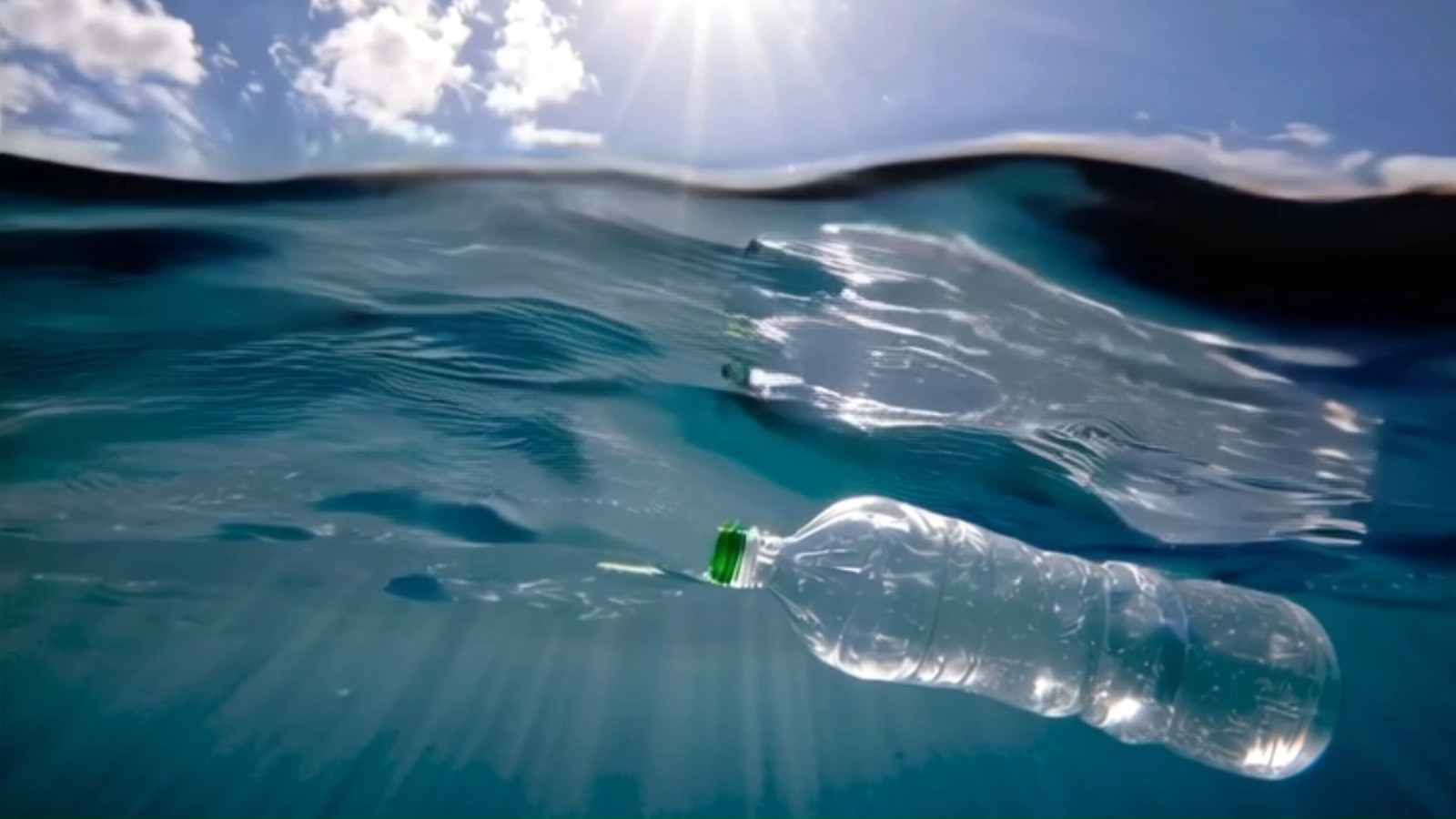
RETHINKING THE END OF LIFEPlastic does extraordinary things. Its persistence after use is the problem we’re working to solve.
E.V.A Biosystems is developing biological additives that bring selective degradability into conventional plastics. Our starting point is PET, a plastic used in many everyday products. Our ambition is a cost-effective safeguard against long-term plastic persistence, designed to scale through familiar manufacturing processes.
See how it worksAn additive approach designed to fit existing manufacturing processes and complement correct waste handling and recycling.
Target specific environments while aiming to preserve the material’s useful performance.
An enzymatic approach to polymer breakdown, with the aim of minimising microplastics.
02 / How it works
SMALL ADDITION. BIG AMBITION.From manufacture and everyday use
to environmental response and breakdown.
Scroll through the process or choose a stage above
01 / MANUFACTURE
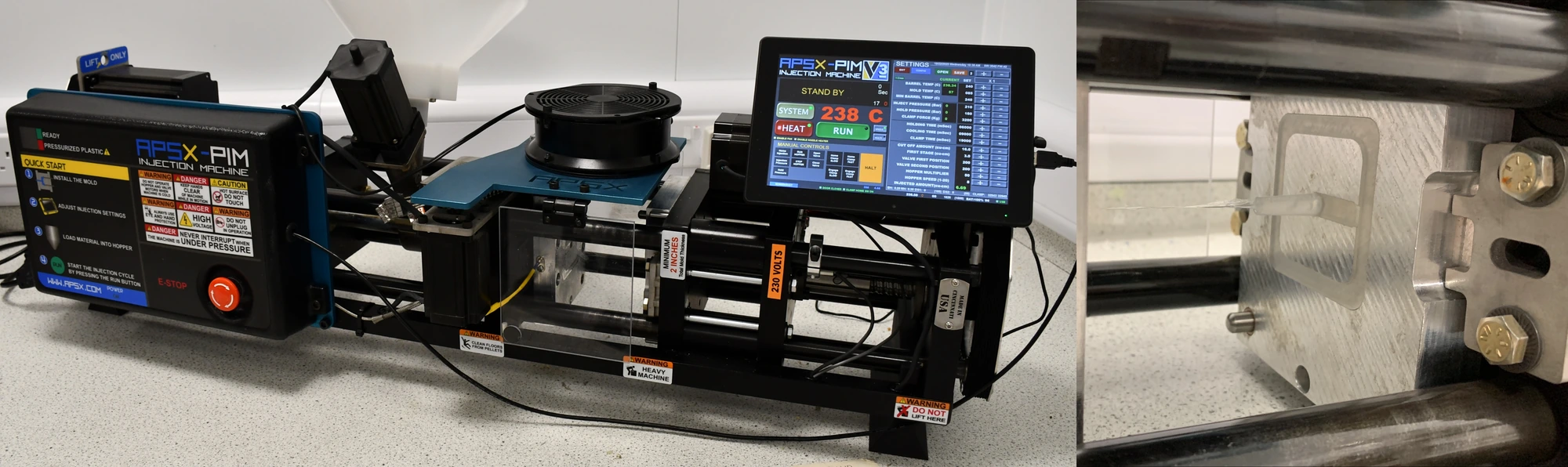
We’re developing biological additives for use in plastic manufacturing, including injection moulding.
Microbes and plastic enter a moulding machine. The finished tray contains embedded microbes, shown in a magnified cutaway.
01 / 04 · Scroll to continue ↓
02 / USE
The goal is plastic that performs throughout its working life and remains recyclable afterwards.
A tray holds small parts while an embedded microbe remains inactive and the plastic stays intact.
02 / 04 · Scroll to continue ↓
03 / ENVIRONMENT
We’re designing the biology to respond to environmental conditions found in settings such as seawater and landfill.
Na⁺ represents salt; H⁺ represents pH. These illustrate potential activation signals.
Salt and pH symbols approach an embedded microbe, which changes colour to indicate activation. Seawater and landfill are shown as separate potential environments.
03 / 04 · Scroll to continue ↓
04 / RESPONSE
Under suitable conditions, the embedded microbes are intended to release enzymes that break the plastic’s long polymer chains into individual building blocks called monomers. Microbes can then take up these molecules and use them as nutrients.
Enzymes released by an embedded microbe reach the surrounding plastic, where local areas begin to break down.
04 / 04 · The intended response
Concept animation. Material performance, activation conditions and breakdown outcomes require testing for each application.
We’re developing microbes that use biosensors to recognise selected environmental signals and trigger enzyme production. Selecting different signals, or combinations of signals, could help make activation more specific to the intended environment.
By pairing these sensors with enzymes matched to the target polymer, we aim to tailor both the conditions that activate the biology and the material it breaks down. Our initial focus is PET.
INSIDE THE LAB
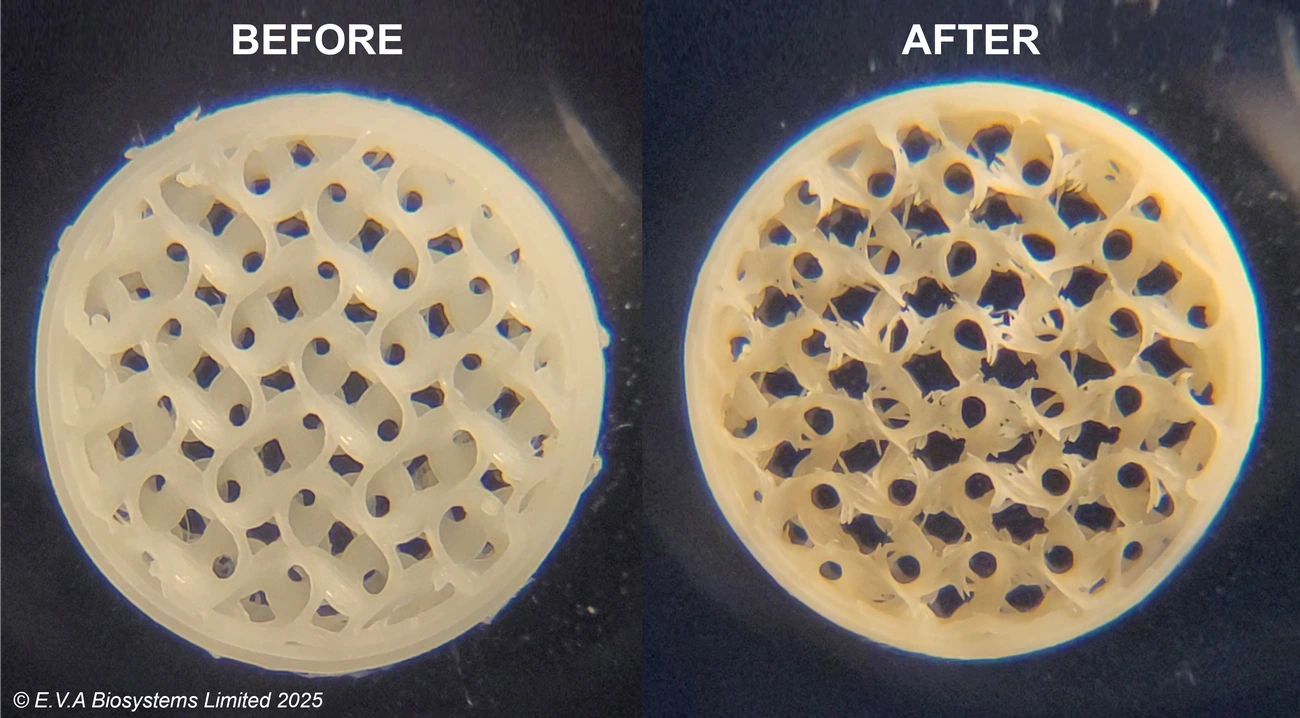
Timelapse of microbes growing from an injection-moulded PET sample.
03 / Our progress
REAL STEPS. LONG-TERM THINKING.From early prototypes to manufacturing partnerships,
we’re working towards commercial readiness.
Innovate UK - Launchpad: Bio-based Manufacturing, Scotland – Rd2 CR&D project
BIOME – Bioplastic Injection-moulding Optimisation and Microplastics Evaluation
A collaboration with the National Manufacturing Institute Scotland (NMIS), supported by investment from Coca-Cola Europacific Partners Ventures, to improve commercial readiness with a focus on injection moulding of PET.

SMART:SCOTLAND FEASIBILITY STUDY
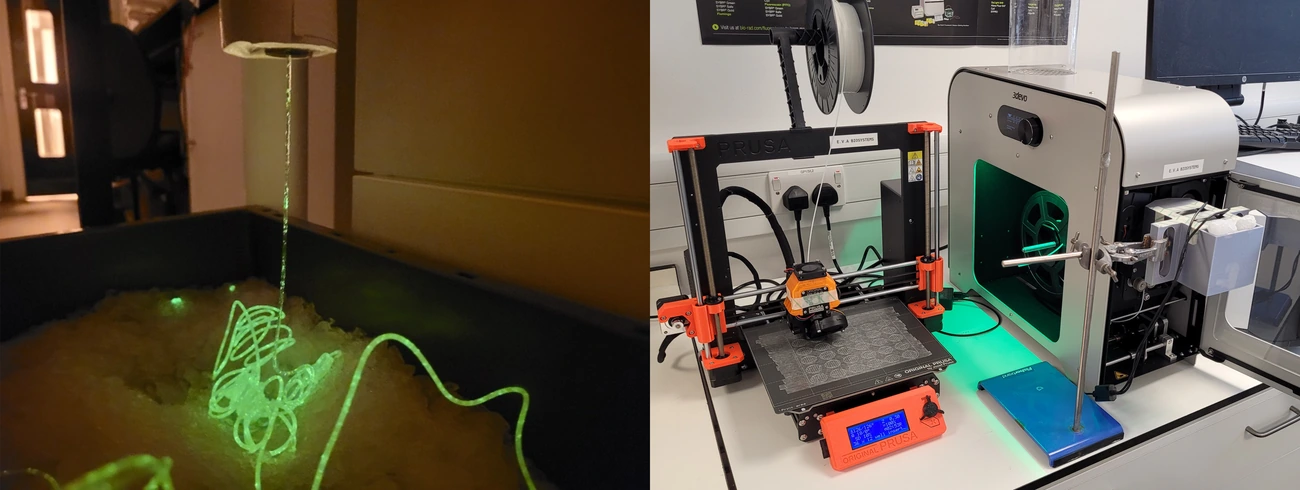
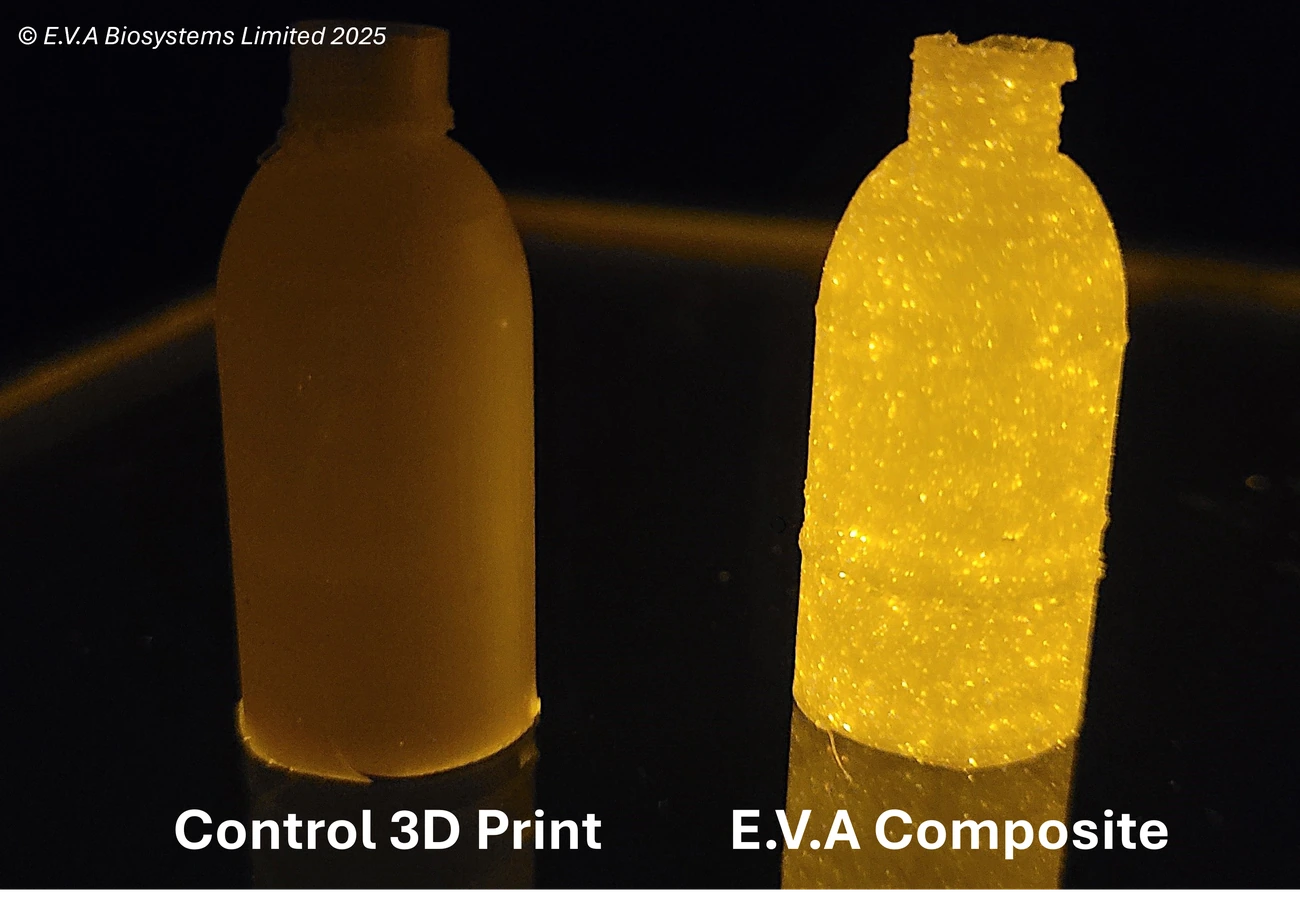
Supported by Scottish Enterprise and Old College Capital to develop initial prototypes, including custom biological composite 3D printer filaments.

AWARDS & RECOGNITION
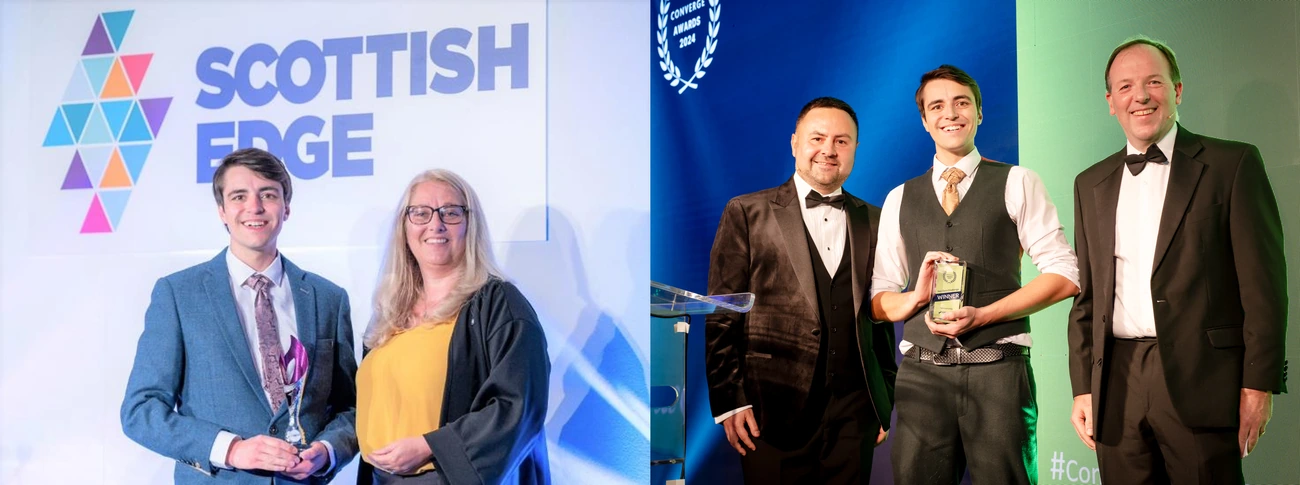
Winners of Young Scottish EDGE (2022), Edinburgh Innovations’ Inspire Launch Grow (2023), and the Net Zero Challenge and IBioIC Industrial Biotechnology awards at Converge Challenge (2024). First place in the European Institute of Innovation and Technology (EIT) HEI-Powered Startup Pitch Competition (2025). Finalists for Bio-tech Manufacturer of the Year at the Made In Scotland Awards (2026). Also featured in PwC’s Net Zero Future50 report (2025).
04 / The people
BIOLOGY WITH PURPOSEOur mission is to build a better end of life into everyday plastics.
We’re bringing biology and materials science together, taking our work from the lab towards larger-scale manufacture.
Our technology is in development and is not yet commercially available. We’re looking for supporters and collaborators to help take the technology forward.
Follow our journey on LinkedIn (opens in a new tab)
Founder and CEO

CSO

Bioplastics Researcher

Bioplastics Researcher
05 / Work with us
COLLABORATION · INTERESTWorking on what comes next for plastic?
We’d like to hear from you.